

LM Ericsson USE 6800

Introduction
In the early 1980s, the Electronics Division of the Physics Department of Umeå University, which later became the Department of Applied Physics and Electronics, gave LM Ericsson's now-defunct factory in Östersund the task of developing and building a development system for the Motorola 6800 and 6809 microprocessors. The result was USE 6800 – a modular system built out of what I believe are AXE telephone exchange system components, as well as custom ones, built into a military-grade-looking cabinet.
It was given to me, among a huge pile of other things, by my old university teacher and friend Håkan Joëlson, who had to downsize his (quite respectable) collection. I believe he used this system for his thesis project, and he then saved it from ending up in a landfill when more modern systems were brought in. He doesn't know how many were originally built, but it seems unlikely that there are any more left except this one.
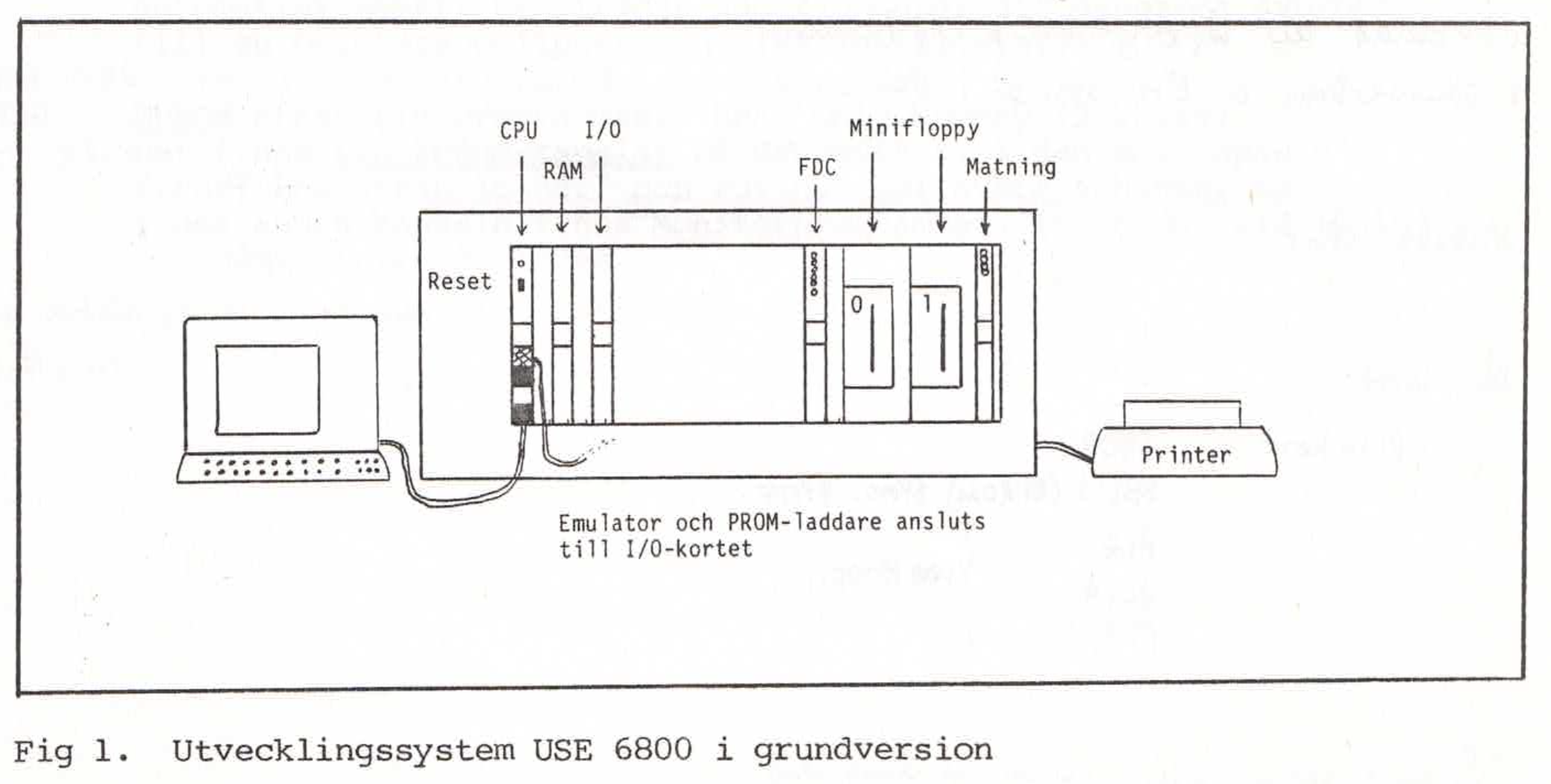
The system runs the FLEX (and FLEX09) operating system by TSC, Technical Systems Consultants, an operating system that was first released in 1976, and had its last release in 1985 – just a couple of years after the USE 6800 was made. I had never heard of it before I came across it in the manuals for the USE 6800, but as it was only released for the Motorola 6800 and 6809, and had its last release when I was five years old, that's probably to be expected :)
Hardware
The board scans and observations now have their own hardware page. The original 6800 card, the patched 6809 upgrade, and the rest of the system are documented there.
- CPU card P/N ROF 137 3204
- CPU card P/N N/A
- RAM card P/N ROF 137 3201
- IO card P/N ROF 137 3202
- Floppy controller P/N ROF 137 3203
- Power distribution P/N ROF 137 3299
- I/O Display/Keypad P/N N/A
Manuals
The manuals page brings together the scans, thumbnails and a reading order, starting with the hardware and working through the programming tools. It also includes Håkan Joëlson’s notes from his student days.
- Hardware and startup — Häfte 17: Utvecklingssystem USE 6800
- Talking to the machine — Häfte 16: Manual för Heathkit-terminal (H-19A)
- Finding your way around the disks — Häfte 10: The FLEX Operating System
- Writing the source — Häfte 11: TSC 6800 Text Editing System
- A screenful of source — Häfte 19: Skärmeditor (6809)
- Turning text into a program — Häfte 12: TSC 6800 Mnemonic Assembler
- Finding out why it went wrong — Häfte 13: TSC 6800 Debug Package
Disk investigation
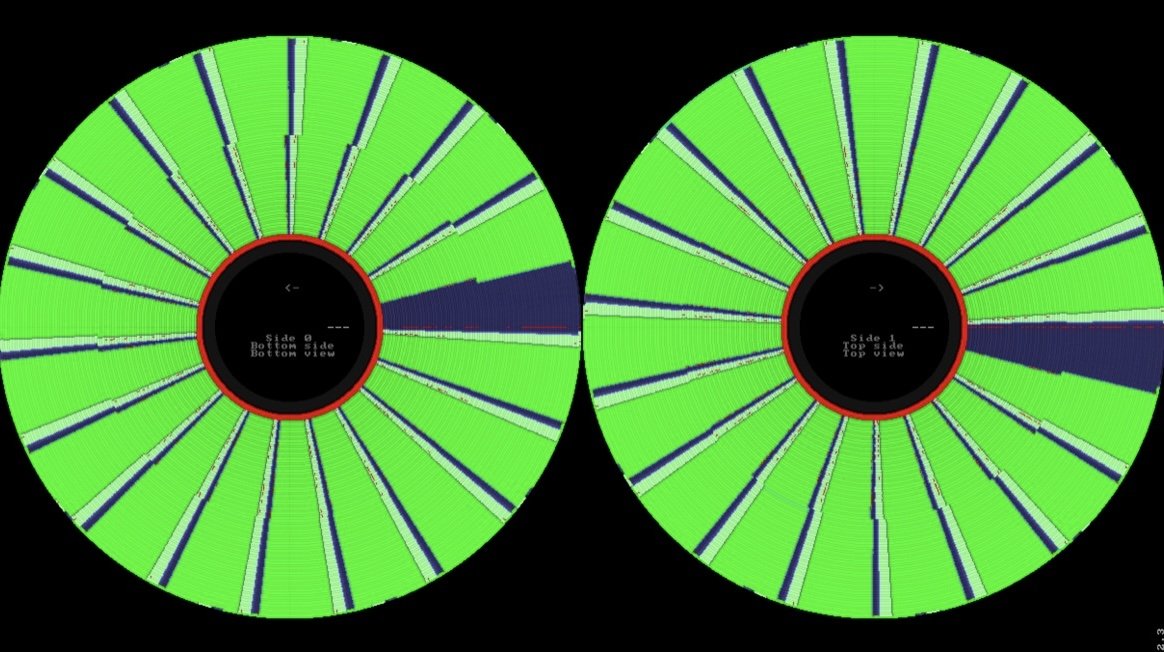
The first raw floppy image has yielded a readable FLEX directory and assembly source beyond the live filesystem. Read the investigation for the recovery process, the 6809 identification and the downloads.